A weekend in Lyon
December 15, 2010 § 1 Comment
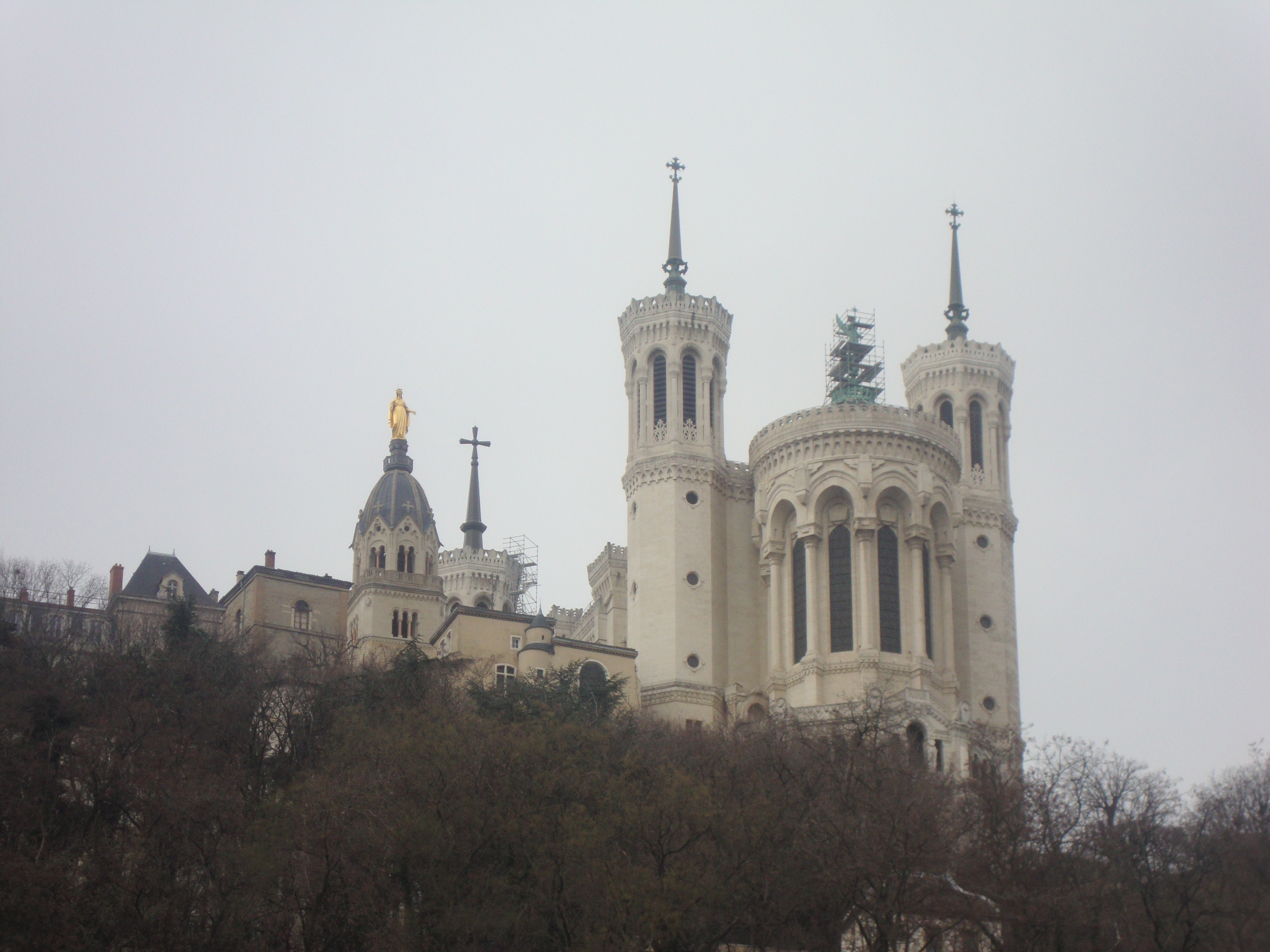

I arrived in Lyon on the Friday of the fête des lumières in a sleep induced haze brought on from a sleepless night and three early morning hours of dealing with the French bureaucracy getting my visa validated, just days before I leave France for good. I took one look at a metro map which included the entire city’s bus system as well and decided there was no way I could deal with it right then. My cab driver was nowhere near as chatty as I am used to, though it struck me that he was the first French cab driver I have ever seen; he was Lyon-born, while most cab drivers in Paris are recent immigrants, usually from North Africa. My next cab driver was another Lyon-native and I lost track of time — and our route — talking with him about shark hunting in Tahiti.

Once I had checked into my hotel, the situation called for very extended nap, to be woken only by my friend for dinner at Brasserie des Ecoles, a classic brasserie with painted windows for the holidays, where I had a pleasant salade chèvre chaud, which I have been craving and was long overdue. A brief walk around La Croix Rousse, a pint of beer at Sullivans Irish Pub, generous servings of fries with dipping sauces (the mayo given wasn’t a choice) at a random kebab shop and a long walk to Vieux Lyon, I found myself waiting out the night at a late-night bar called the Melting Pub. It would not have been my first choice of hangouts and we quickly made our way to the back, when I staked out a stool—as if on display, one of the guys commented. The bar was one of those places for the people who just can’t let go of the night and for the really tired people who just want to the opening of the metro to come faster. I quickly became part of the second group: after awhile my eyes started to burn from the smoke — the bar allows smoking indoors — and an hour in, I was fighting the urge to itch at my eyes.
But as much as I complain, I love being awake for those early hours of the morning, as the night people and the morning people overlap, men order their last beers at the bar and girls in heels light up their last cigarettes on the walk home while the merchants start to set up their displays, brioches and tarts begin to appear in the storefront windows, but it is still hours before the lines start to form out the door of the famous boulangeries. One such boulangerie in Lyon is the Boulangerie du Palais, where huge lines form for their brioche aux pralines; Lyon has several famous regional candies, one of them being pink pralines which are baked into sweet breads, tarts and croquants. I managed to get my hands on a brioche my last morning in Lyon and once having sufficiently tasted it, gave it to the homeless man I had walked past earlier, who was shivering in a doorstep lighting a cigarette, a pair of ski goggles raised on his head and a rainbow scarf around his neck. When I said “brioche aux pralines” his face light up like a little kid’s and his smile made me forget everything I knew how to say in French.
I had a delicious, fruit and nut packed praline croquant and also sampled other Lyonnais candies: les quenelles, a hazelnut-praline filling covered in a thin layer of white chocolate, and les coussins, a chocolate mousse perfumed with curacao enrobed in sunny yellow or green almond paste and sugar coating.
A trip to the Marché de Noel by the Perrache train station found tartiflette, the traditional Lyonnais potato gratin, slowly cooked with onions, thinly sliced bacon (lardons) and lots of cheese. Stopped to chat with the Quebecois lady selling maple products, and her husband making pancakes with real maple syrup on the crepe skillet, but was disappointed that she didn’t carry my favorite maple sugars, as they are too difficult to transport.
But believe it or not, my days weren’t just filled with eating. We wandered the Parc de la Tete d’Or at night, walking the paths by the lake lined by pots of fire and warming our hands around big balls of fire which shot out sparks, which magically seemed to go out immediately upon hitting the dry leaves on the ground. I took shelter inside at the Musée des Beaux-Arts, where I saw the Louis Cretey-Un Visionnaire entre Lyon et Rome exhibit. I headed up to la Cathédrale Saint Jean at the Fourvière before most of the tourists were out in the morning to take in the city from above. But as the cafes were all closed at the top of the hill and it was clilly out, I headed back down to Bar de la Ficelle for my morning café crème.
The French eat too
December 8, 2010 § 1 Comment


There are few things that make me happier than a group of rail-thin French women cooing with delight and diving into slices of a warm American pecan pie for their petit gouter alongside steaming cups of thé vert. Or when they profess to adore carrot cake, cream cheese frosting and all, and suggest I open up an American style bakery in Paris, because they just know it would be a huge success. Indeed there are several American-style places here, if you want to search out bagels and brownies — which seem to be the main focus — but few places to buy ingredients with which to make your favorite American treats. It’s surprising what Americans seem to feel they need imported — the likes of Betty Crocker icings in all flavors, yellow cake mixes, and colored marshmallows, although I think it was the French girls that were cooing over those in the Etats-Unis aisle of La Grande Epicerie at the Bon Marché.
But it was on that aisle that I finally found Grandma’s molasses and ordinary corn syrup, which are both still practically unheard of here. Actually I take that back. The minute you say corn syrup here, you get a quick intake of breath and a mumbled “c’est pas bon pour la santé” as if the pound of butter dumped in every French dish is bon pour la santé. So needless to say, you don’t see any French women dumping the container of corn syrup into their tarte fillings — because tart is the closest approximation I can find to pie — but they won’t hesitate to eat it when it’s placed in front of them in the form of this gooey-still-warm-from-the-oven tart that the little American girl brought in this morning. Because, eating is, afterall, about indulgence.
This pecan pie — or pecan squares as they go in my house — is a classic on my family’s Thanksgiving table. It has a strong molasses flavor and is packed full of pecans, avoiding that gooey, far-too-sweet layer of sugar and corn syrup that many pecan pies pack in the middle. Nothing horrifies me more than a badly made pecan pie, with a thick layer of cooked sugar and a sprinkling of nuts on top. I may have Frenchified the classic a bit by making a tart crust with a generous amount of sugar and egg, instead of the simple butter-and-flour combo my dad uses, and baking it in a fluted, rectangular tart pan instead of a brownie pan.

But either way, this is the way to go come Thanksgiving (or for me, come breakfast) no matter where you live. A couple of weeks late to the Thanksgiving post, but there you go. Now excuse me while I eat the last piece with my cup of tea for breakfast. Can’t be worse for you than a café crème with a half a baguette, split down the middle and spread liberally with butter right?
Pecan Squares
Adapted from Jeremiah Tower’s New American Classics
2 eggs
3/4 cup dark brown sugar (or half unsulphered molasses, half corn syrup)
1 cup dark corn syrup
1/2 tsp salt
2 tablespoons bourbon
2 tablespoons butter
1 teaspoon vanilla extract
2 cups pecan pieces
One recipe of Pasta Frolla pastry dough or simply use your fingers to combine cold butter and flour until you achieve a shortbread-like consistency.
If using a crust made of just butter and flour (combine until crumbly and the dough stips together when you press it with your fingertips), bake pastry shell until golden (about 10-20 minutes) at 350 degrees Farenheit.
If using the Pastra Frolla, there is no need to pre-bake the pastry shell, just follow the directions here and press the rolled-out dough into the tart pan and fill.
Make sure your tart shell has no little holes as the filling with leak and burn in your oven.
Melt butter over the stovetop and set aside. Combine eggs and sugar. Add corn syrup, salt, bourbon, butter, and vanilla. Stir in pecans. Pour the filling into the pastry shell. Bake until mostly set at 350 degrees Farenheit, about 20 to 25 minutes.
Let cool before cutting.
Pasta Frolla meets my lemon tart
November 30, 2010 § 3 Comments

I recently read this article on grandmothers and knitting and immediately emailed it to my own grandmother, who knows much more about knitting than I do. In fact, I think almost every woman in my family is skilled at crocheting dish clothes and knitting baby sweaters. In our attic is a collection of baby sweaters in various whites and blues (depending on whether or not the family was informed in advance of the baby’s gender), a tradition which unfortunately will probably end quite soon as I am totally incompetent at knitting. Every so often, when I go up north to visit my grandparents, I get it into my head that I will learn to excel at knitting — I go with Granny to pick out yarn and spend a day or two on the couch knitting a couple inches, calling out for help every ten minutes when I drop a stitch and don’t know how to fix it. After about two inches, I give up until my next visit. So I’m afraid there won’t be any new pink sweaters for my grandchildren, they’ll have to make do with the ones in the attic. Sorry.

But Granny’s baking was something I picked up with ease. She cans cherries and peaches in the summer, makes blueberry pies and crisps and always has oatmeal cookies waiting when I come visit. No raisins, no nuts, no chocolate. Just oatmeal and cinnamon. But one of my very first memories of baking with her is making angel food cakes with lemon pudding filling and whipped cream for Grandpa’s birthdays. I loved hanging the angel food cakes upside down and whipping the cream with an electric mixer (which we didn’t — and still don’t — have at home) and I loved the idea of lemon pudding. There were few things not made from scratch in her household — minus the chocolate-covered marshmallow cookies to which Grandpa holds fast and loyal — and the lemon pudding was one of them; it emerged off the stovetop a pale yellow custard made from yellow powder. I think that was my least favorite part of baking — the disappointment of that first bite of yellow lemon pudding.
But I’ve held fast and loyal to the idea of lemon pudding and when all else seems to go wrong, I turn to lemons to come through for me. So when I trekked across Paris today to the Galleries Lafayette in search of blackstrap molasses and corn syrup in order to make my family’s traditional Thanksgiving pecan squares, and came up empty handed after hours of scouring shelves of sea salts, gourmet pates à tartiner, macarons, imported goods from all over the world, colored sugars shaped in hearts and flowers and everything else you could imagine in gourmet food heaven, I inevitably turned to the lemons sitting on my counter to save the day.
As a food blogger, I have a tendency to not want to make anything twice. I mean, why would I post on the same thing more than once? But then how can I sit here and tell you that this is the most amazing thing I’ve ever eaten when I have no intention of ever eating it again? I am justifying this with, I finally made a tart crust that actually has a recipe and it was fabulous. So make this tart crust…and well you don’t really need to be told again what I think you should fill it with, do you?

I judge every Parisian patisserie by its lemon tart and well, let’s just say the reason I can’t rave about Pierre Hermé macarons like every other person in the world is because I tasted his lemon tart first — and I prefer the ones that come out of my own kitchen. Take that Paris.
The crust for this “crustata” is called pasta frolla, which was the November Daring Bakers’ challenge. The 2010 November Daring Bakers’ challenge was hosted by Simona of briciole. She chose to challenge Daring Bakers’ to make pasta frolla for a crostata. She used her own experience as a source, as well as information from Pellegrino Artusi’s Science in the Kitchen and the Art of Eating Well.
Pasta frolla
Ingredients:
1/2 c. minus 1 tablespoon [105 ml, 100 g, 3 ½ oz] superfine sugar or a scant 3/4 cup [180ml, 90g, 3 oz] of powdered sugar
1 and 3/4 cup [420 ml, 235 g, 8 1/4 oz.] unbleached all-purpose flour
a pinch of salt
1 stick [8 tablespoons / 4 oz. / 115 g] cold unsalted butter, cut into small pieces
grated zest of half a lemon (you could also use vanilla sugar as an option, see Note 2)
1 large egg and 1 large egg yolk, lightly beaten in a small bowl
Making pasta frolla by hand:
Whisk together sugar, flour and salt in a bowl.
Rub or cut the butter into the flour until the mixture has the consistency of coarse crumbs. You can do this in the bowl or on your work surface, using your fingertips or an implement of choice.
Make a well in the center of the mounded flour and butter mixture and pour the beaten eggs into it (reserve about a teaspoon of the egg mixture for glazing purposes later on – place in the refrigerator, covered, until ready to use).
Add the lemon zest to your flour/butter/egg mixture.
Use a fork to incorporate the liquid into the solid ingredients, and then use your fingertips.
Knead lightly just until the dough comes together into a ball.
Shape the dough into a flat disk and wrap in plastic wrap. Place the dough in the refrigerator and chill for at least two hours. You can refrigerate the dough overnight.
Directions to assemble and bake a crostata di frutta fresca:
Preheat the oven to 350ºF [180ºC/gas mark 4].
Roll out a batch of the pasta frolla and cover the base of the tart pan.
Cut a piece of parchment paper or aluminum foil large enough to cover the bottom of the crust and extend out a bit over the edges of the pan.
You can use pie weights or dry beans to blind bake. Place whatever weight you’re using directly on the parchment paper or aluminum foil in an even layer.
Place the crostata shell in the oven and bake for 20 minutes.
Remove the weights and parchment paper and continue baking the crostata shell until the border is light golden, about 5 minutes (watch carefully to avoid over-baking, which results in a hard shell). In the absence of weight, the crust may rise in the middle: if that occurs, gently push it back down with the back of a spoon.
Remove from the oven and let the crostata shell cool completely before proceeding.
If you use a tart pan with removable bottom, release the base from the fluted tart ring, then slide the cooled crostata shell on a serving plate for filling. (Note: If you’ve used a cake pan or pie plate, use a bit of care in taking the shell out of the baking vessel.)
Spread the prepared filling over the cooled shell.
The food of Vientiane
November 14, 2010 § Leave a comment
It’s no secret that I love street food vendors. As someone who subscribed to the San Francisco Crème Brulée Cart’s Twitter feed just to know where the man was on the hour, it is almost impossible to get me to walk past a food vendor on the street without stopping to sample or purchase, just one bite of some strange new food I had never seen before. It is also equally unlikely for me to be seen walking past a bakery window without stopping to peer inside. Vientiane is the perfect spot for this type of exploring. Food vendor carts line many of the streets of this small city, women selling roasted meats, sweet snacks and Lao iced coffees, which is sweetened condensed milk poured over a very strong brew — very close to an espresso packed with sugar. Done right, it’s delicious; done wrong, it’s one cringe-worthy sip after another of liquid sugar, making you wonder whether your teeth might be rotting at that very moment.
Throughout the trip, I basically threw myself into the hands of people who knew better and let them do the majority of the ordering. This makes writing about specific food I ate rather hard because I would often ask what I was eating, to be met with some complicated word in Lao, which I would then have to have repeated about ten times as I scrambled for a notebook. Even for those who did speak Lao, ordering food often consisted of pointing, shaking your head and then pointing again. This process could go on for a variant amount of time before you received something that corresponded — sometimes only approximately — to what you had originally desired.
Some of you may remember my post on a Lao cooking class, which I hosted this summer. I spent the week tracking down my favorites from that as well as trying anything that looked exciting. The convention’s buffet food served as my introduction to food in Laos, which was unfortunate because I soon took to the streets looking for something more authentic. There, we found…


Roasted meat and crackly pork rolls all wrapped in leaves of lettuce with peanut and black bean sauces, ginger and other fresh herbs at an open=front restaurant with a laminated menu and few choices. Fresh spring rolls too!
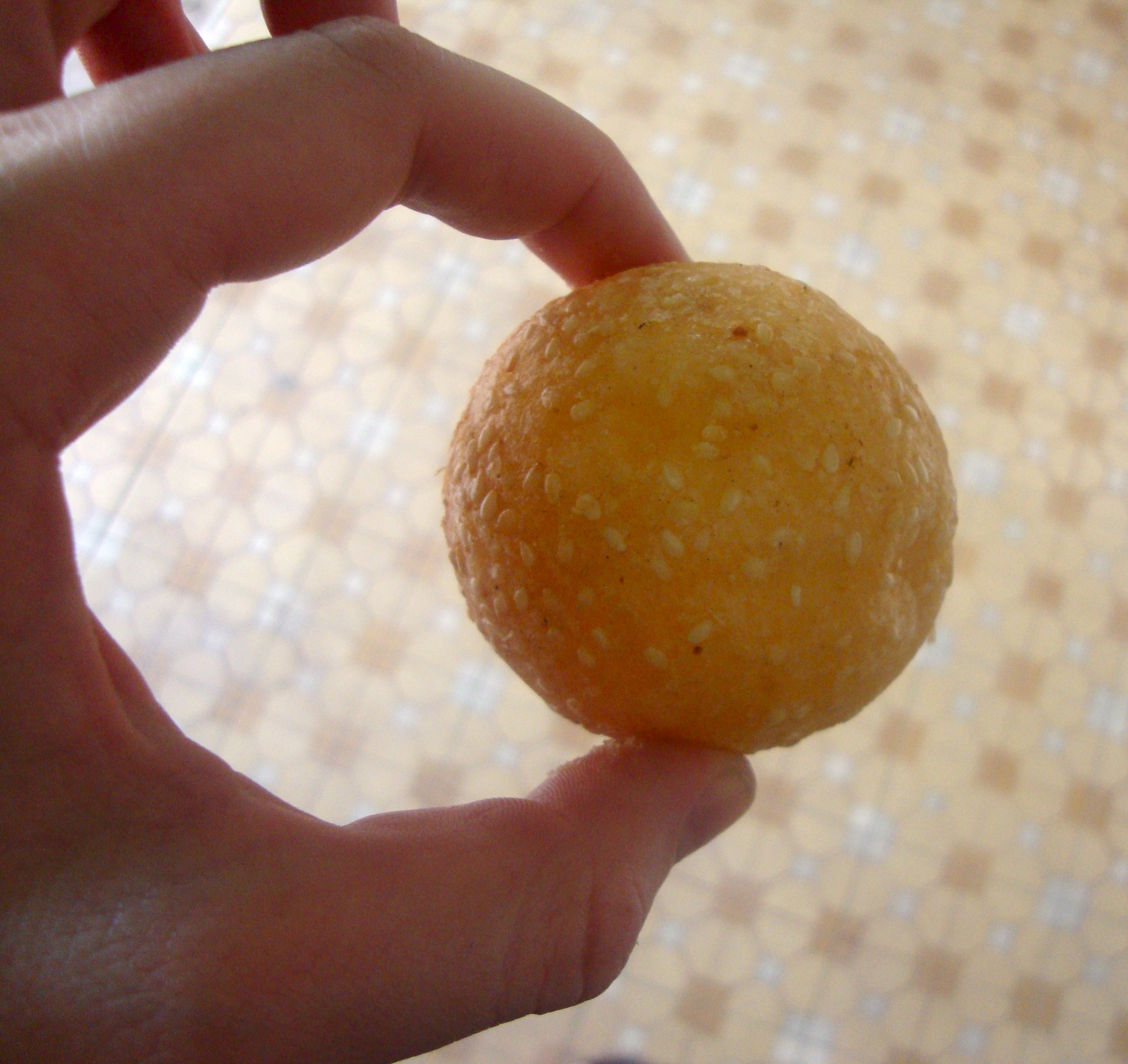
Sesame balls at the talat sâo or morning market.

Fried gluttonous coconut cakes filled with corn kernals.
 Buttery, melt-in-your mouth cookies at the Scandinavian Bakery.
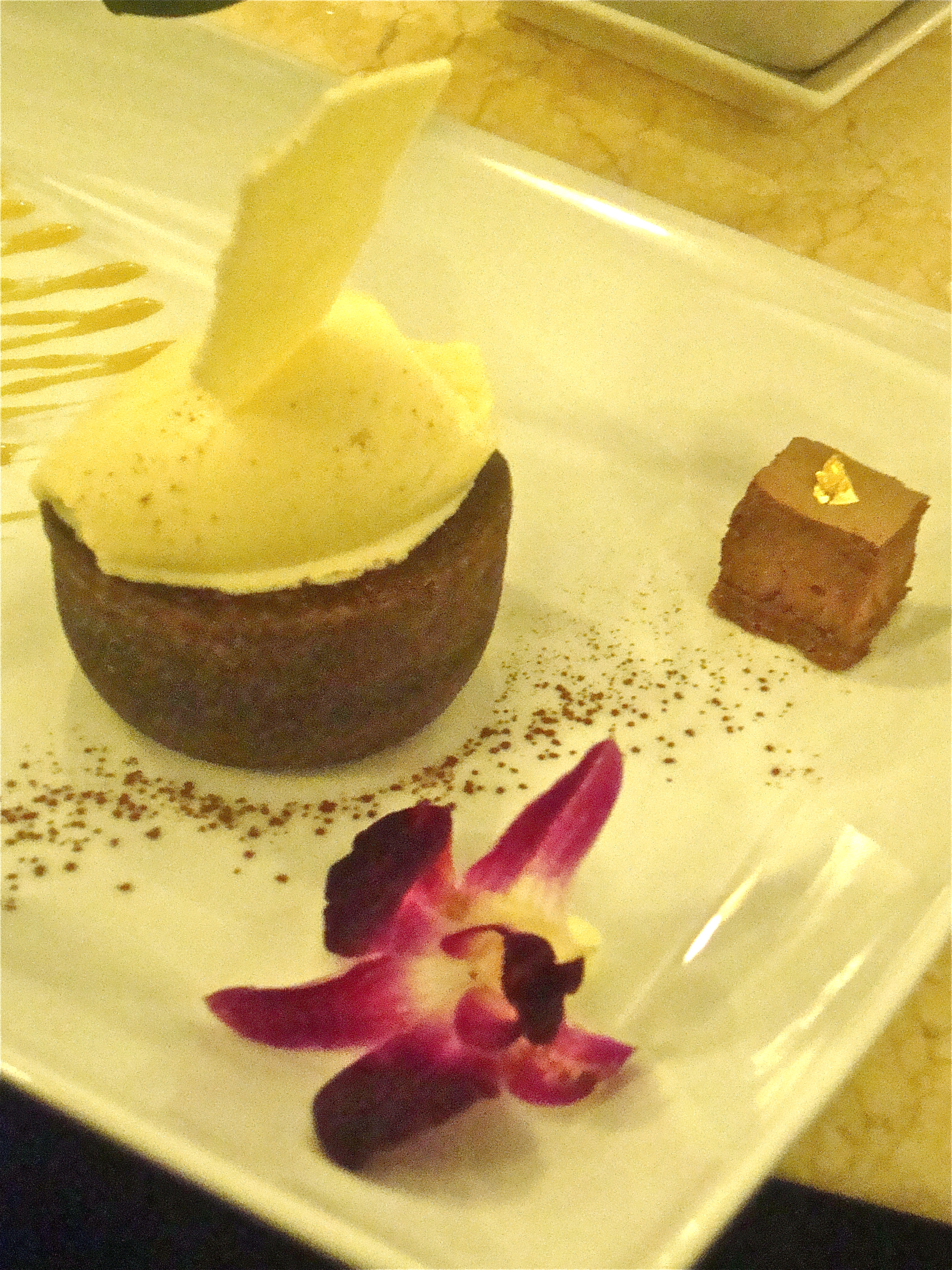 Moelleux au chocolat with a molten chocolate cake, chocolate pot de crème with a crackly top and small chocolate truffle served with citrus sauce and vanilla ice cream at the restaurant at the Ansara Hotel, which is a small hotel on a quiet alleyway frequented by French visitors. Fittingly, I just had a moment looking at the words “ice cream” spelled “ice crème” trying to put my finger on what was wrong.
 I included this picture not because this was particularly good but because it was one of the most interesting things I was served in Vientiane: a lemon tart, which looked quite good from the exterior, revealed a layer of chocolate cake when I took the first bite.
Laab minced chicken with onion, mint and chili and fish sauce at the house of a woman’s friend — dinner guests included the Lao ambassador to the UN. Followed by one of the best desserts I have had in a long time: sweet coconut sticky rice topped with custard, steamed in banana leaf. I should also mention that we had dinner at the Prime Minister’s office, complete with red carpet, white tablecloths, over 1,000 guests and entertainment all night long. 
Finally, on my last night here, we found mok pa, white fish steamed in banana leaf (are you sensing a trend here with my favorites?) with lemongrass at Amphone. On the table were also Lao sausage, which unlike most sausages which I find disgusting, consisted of packed ground meat enclosed in a crispy, oily wrapper, which crackled when touched, pîng pa whole fish packed with fresh herbs and grilled, like they do at stands by the riverside, and endless típ khào full of sticky rice.
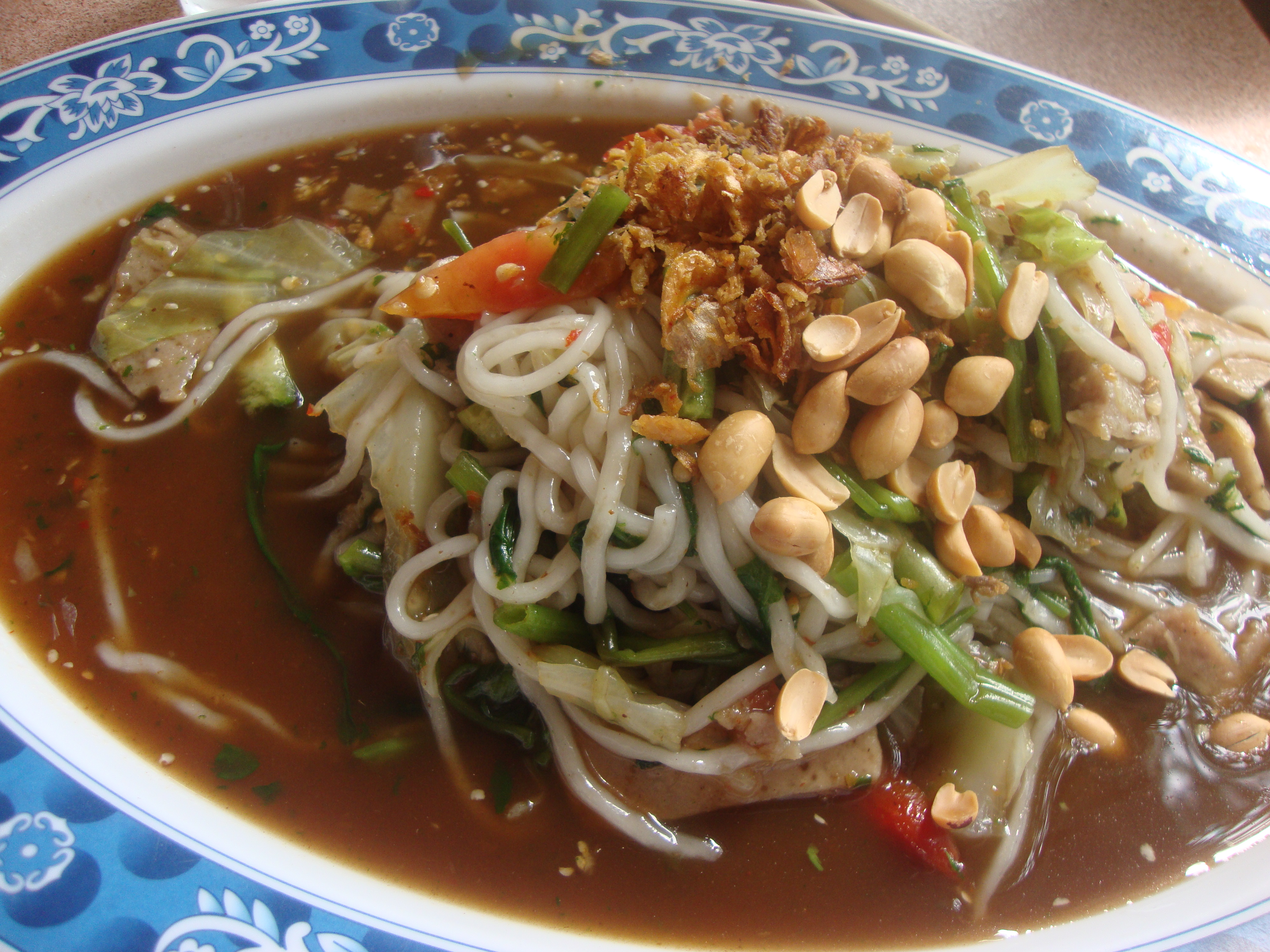
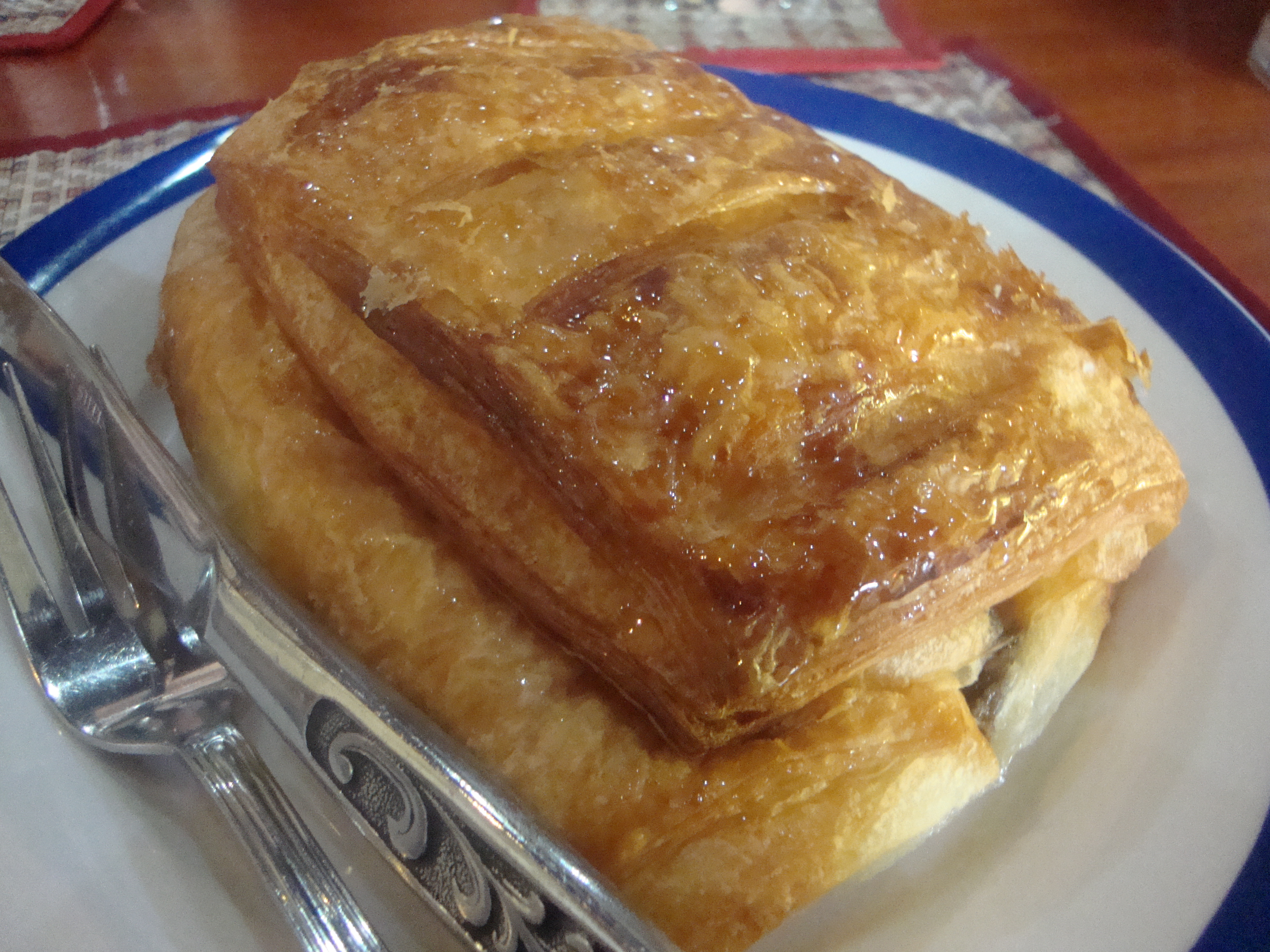
There were also plenty of pineapple and papaya shakes, rice noodle soup (fõe) served with a strong kick — though I was only ever givens felong spicy (or white person spicy), Vietnamese sandwiches which I have been craving since I was younger and vegetarian and could not eat them, and croissants for breakfast, a staple left over from French colonial rule. On the last morning, I sought out some French comfort at Le Banneton where I had a pain choco-amande and Lao iced coffee. The French ex-pats can be found sitting at the outdoor tables eating their morning tartines and croissants alongside strong cafes.
And all of this washed down with BeerLao, which I believe is actually cheaper than water, which even the locals drink bottled.
*Also, more of my writing about Vientiane, Lao P.D.R. can be found on Legacies of War site here or here.
Beginnings of Vientiane
November 9, 2010 § Leave a comment


Photos by: Bangbay Siboliban
I have never been anywhere like this before. When I look out the window, I see thatched awnings, open-faced stores where people sit outside in half circles, talking to each other late into the night, and vendors selling fresh papaya, meats roasting on open grills. The city is a strange mix of the old and the new. People remark that it has changed so much in the past two years: the smog has rolled in and permeates the streets and cars weave between more traditional methods of transportation, crowding streets that were once almost devoid of cars. But for me it is all new and I soak it in with wide-eyed innocence.
As we step outside into the hot smog, we clamber into a tuk-tuk, a rickety contraption that looks like the back half of a pick-up truck only powered in the front by a motorcycle engine. We ride by the most recent addition to the city, a statue pointing to Thailand along the riverside, which holds hosts to tents and food vendors. For a mere 30 000 kip (the equivalent of about $3) we go the distance to the Don Chan Palace, which was built by the Chinese in 2004, complete with shiny surfaces and gaudy lobby decoration, all quickly deteriorating. The entrance to the hotel is marked by the presence of guards and security machines —much like the entrance of an airport — and we have to walk though a metal detector to gain access to the hotel shops in the lobby selling big, flashy necklaces, almost certainly fake, and shawls of every shade and color.
Outside the hotel, Lisa has set up a stationary tuk-tuk covered with the Tapestry of Hope: Weaving Together a Bomb-Free Future. Lisa, who recently moved to Vientiane, wears comfortable sandals with sturdy soles as she walks everywhere and has her hair cut short in a simple, carefree way. She stands in front of the exhibit, which consists of square pieces of postal paper tied together at the four corners with string, illustrated by people living in the Twin Cities and the San Francisco Bay Area among other places our organization, Legacies of War, has held workshops in the United States. Beside the tuk-tuk is a counter set up for Vientiane contributions to the exhibit; passersby can stop and paint or draw their own pieces, which are immediately tied to the existing tapestry. The morning started out slow with a slight hitch when the Lao coffee —essentially espresso sweetened with condensed milk — arrived with a splash, literally. But soon, people started stopping by and one by one, the paint colors were opened and put to use. The Lao Prime Minister arrived then, taking most of us by surprise, and I shook his hand before quite realizing who he was.
As the day moved on, I sampled fried coconut cakes, stuff with corn kernels, and marveled at the wide variety of fruits for sale on the sidewalks as it is fruit season in Laos at the moment. The evening passed at a reception in the Cultural Hall and an exhibit by Lao artists of their representations of the Lao countryside, which is contaminated with active cluster bombs which can be set off at any given moment. An extended nightcap on the top floor of a bar along the riverside, sitting at the open balcony looking out at the lights of Thailand across the water, and then we were back on the streets, wandering in search of my guest house, across the street from the Inpeng Temple.
Sugar High Fridays November Announcement #71
November 1, 2010 § 6 Comments

This is my first time ever hosting a baking challenge and I’m so nervous, anxious and excited. This month, I am hosting Sugar High Fridays, which was started in 2004 by Jennifer, the Domestic Goddess.
I’ve gone back and forth on a lot of themes — you know the age-old rounds of thinking and second-guessing — before finally settling on one that I’m pretty confident in. The theme for this month’s Sugar High Fridays will be “Desserts with a Hidden Surprise.” For this event, you can make any dessert provided it includes a center that is different from the exterior; an example of such would be those yummy chocolate cookies with the peanut butter center ☺
Make a dessert and blog about it between today and the 22th of November (the Monday). Send me an email at hhammel12@gmail.com with SHF as the subject.
If you do not have a blog, please send me your post with recipe and picture and I’ll post it in the roundup.
Please be sure to include a link in your post to Jennifer’s SHF page and this announcement. In your email, please include:
The name of your blog:
The name of your recipe and the url of your SHF post
A very brief description of your dessert
A 300px wide picture of your dessert, if possible
Archived posts are welcome, although be sure to re-publish it during November with the required links. Also, please note that you may enter your SHF submission for only one more food blog event.
Is it doughnuts or donuts?
October 27, 2010 § 7 Comments


I can recall exactly two times when and places where I have loved donuts. The first was at 6 a.m. on weekend mornings, when my parents dragged me out of bed and into the car to head out of the city for my swim meets. We would stop at the Safeway by our house on the way — the only time in my childhood when I was allowed to eat this kind of junk food — and I got to pick out two donuts. One was always an old-fashioned glazed donut, which remains my favorite to this day, and the other was some variant of yeasted donut, chocolate-iced maybe, maybe dipped in sugar other times. When I stopped swimming, these donut trips stopped coming too. The only other times I have excessively enjoyed a donut were as a high school senior, when I used to run down to the Irish donut shop with my then-boyfriend. He always got the complicated ones — the apple turnovers and the cream-filled, glazed donuts — but I stuck true to my favorite, the maple-iced cake donut, which was topped with colorful sprinkles. I don’t play the field when it comes to my donuts.
Any other time I have eaten a donut, I have been disappointed by their dryness and have been left feeling predictably sick to my stomach. (Although Nopa once served these incredible, warm sugar-dusted donut holes alongside caramel sauce, and I’m a huge sucker for churros at the zoo, and I have been known to like Tim Horton’s chocolate donut holes, and I also tried deep-fried Oreos at the Italian Street Festival in NYC and will admit to liking them). I can’t say, with this challenge, that my opinion of donuts has changed all that dramatically. I stirred, I kneaded, I battled to the death with sticky dough, I tried it twice, I deep fried, I sugar dusted, I Nutella iced, I ate a couple, and then I wowed my French co-workers, who eagerly took them all off my hands to eat alongside the morning’s French-pressed espressos. The outside was a bit crunchier than I would have liked and the inside could have been a bit fluffier; maybe I’ll try making them again when I am home and not cursing the 12 inches of counter space I have here, but honestly donuts are not high on my to-bake list.
Still it was a challenge, and every challenge has its high points. For instance, I discovered that deep-frying is nowhere near as difficult or as messy as I thought it was. And the grease leftover quickly disappeared under the smell of warmed cinnamon-sugar, which instantly makes me smile when I walk into my apartment. Now if I could just have a slice of buttery cinnamon toast with that, I would say that this was a very successful challenge.

The October 2010 Daring Bakers challenge was hosted by Lori of Butter Me Up. Lori chose to challenge DBers to make doughnuts. She used several sources for her recipes including Alton Brown, Nancy Silverton, Kate Neumann and Epicurious.
Yeast Doughnuts
Preparation time:
Hands on prep time – 25 minutes
Rising time – 1.5 hours total
Cooking time – 12 minutes
Yield: 20 to 25 doughnuts & 20 to 25 doughnut holes, depending on size
Milk 1.5 cup / 360 ml
Vegetable Shortening 1/3 cup / 80 ml / 70 gm / 2.5 oz (can substitute butter, margarine or lard)
Active Dry Yeast 4.5 teaspoon (2 pkgs.) / 22.5 ml / 14 gm / ½ oz
Warm Water 1/3 cup / 80 ml (95°F to 105°F / 35°C to 41°C)
Eggs, Large, beaten 2
White Granulated Sugar ¼ cup / 60 ml / 55 gm / 2 oz
Table Salt 1.5 teaspoon / 7.5 ml / 9 gm / 1/3 oz
Nutmeg, grated 1 tsp. / 5 ml / 6 gm / ¼ oz
All Purpose Flour 4 2/3 cup / 1,120 ml / 650 gm / 23 oz + extra for dusting surface
Canola Oil DEPENDS on size of vessel you are frying in – you want THREE (3) inches of oil (can substitute any flavorless oil used for frying)
1. Place the milk in a medium saucepan and heat over medium heat just until warm enough to melt the shortening. (Make sure the shortening is melted so that it incorporates well into the batter.)
2. Place the shortening in a bowl and pour warmed milk over. Set aside.
3. In a small bowl, sprinkle the yeast over the warm water and let dissolve for 5 minutes. It should get foamy. After 5 minutes, pour the yeast mixture into the large bowl of a stand mixer and add the milk and shortening mixture, first making sure the milk and shortening mixture has cooled to lukewarm.
4. Add the eggs, sugar, salt, nutmeg, and half of the flour. Using the paddle attachment of your mixer (if you have one), combine the ingredients on low speed until flour is incorporated and then turn the speed up to medium and beat until well combined.
5. Add the remaining flour, combining on low speed at first, and then increase the speed to medium and beat well.
6. Change to the dough hook attachment of the mixer and beat on medium speed until the dough pulls away from the bowl and becomes smooth, approximately 3 to 4 minutes (for me this only took about two minutes). If you do not have a dough hook/stand mixer – knead until the dough is smooth and not sticky.
7. Transfer to a well-oiled bowl, cover, and let rise for 1 hour or until doubled in size.
8. On a well-floured surface, roll out dough to 3/8-inch (9 mm)thick. (Make sure the surface really is well-floured otherwise your doughnuts will stick to the counter).
9. Cut out dough using a 2 1/2-inch (65 mm) doughnut cutter or pastry ring or drinking glass and using a 7/8-inch (22 mm) ring for the center whole. Set on floured baking sheet, cover lightly with a tea towel, and let rise for 30 minutes.
10. Preheat the oil in a deep fryer or Dutch oven to 365 °F/185°C.
11. Gently place the doughnuts into the oil, 3 to 4 at a time. Cook for 1 minute per side or until golden brown (my doughnuts only took about 30 seconds on each side at this temperature).
12. Transfer to a cooling rack placed in baking pan. Allow to cool for 15 to 20 minutes prior to glazing, if desired.
Marseille and le sud
October 21, 2010 § 1 Comment


It was dawn when I awoke in the small room we had reserved in Marseille, the second largest town in France after Paris, on the coast of the Mediterranean Sea. I dressed in my warmest fleece — though it was not too warm as I had been expecting beach weather — grabbed a couple mini pain au chocolats from the breakfast spread downstairs, and a tartine spread with blueberry jam, and struggled outside into the cold. I walked down rue Edmond Rostand, back under the arch welcoming you to the Quartier Antiquares, to the old port, where hundreds of leisure boats were tied up for the night. I took shelter from the wind at the Bar de la Marine, where I took a café crème at a small table alongside half a dozen old weathered men, who were reading the newspapers and making short comments to each other. Every time another man walked in, he would go around the tables shaking hands with them all, before grabbing seat. Obviously, a regular Saturday morning habit.

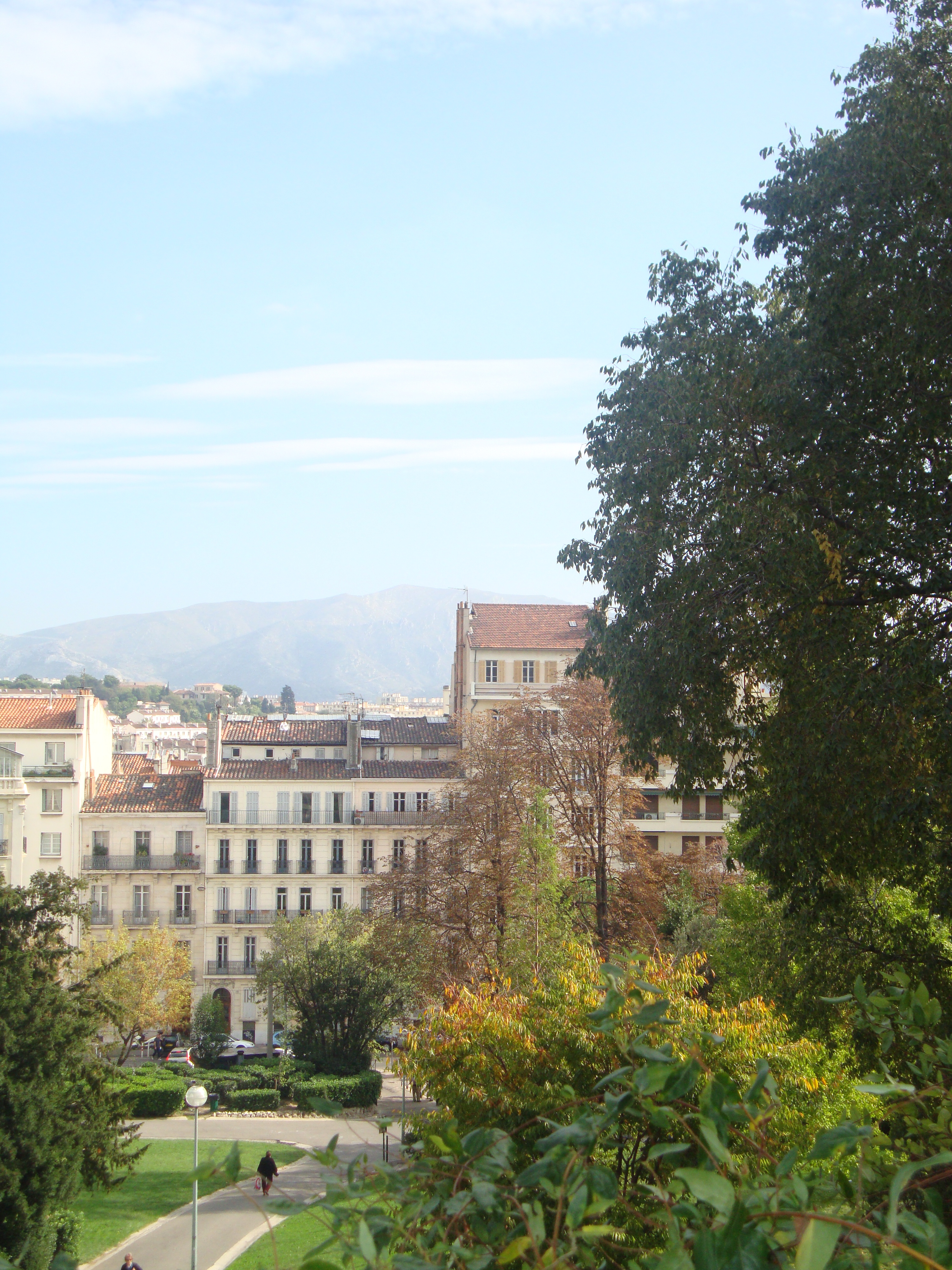

News of the French grèves topped the front pages of every paper, with an expected street demonstration in the afternoon, and the men commented that, in their days, they would never have asked to be paid for a strike day, which is one of the reasons people are still protesting. They handed me the women’s fashion section and then seeing that I was more interested in the news, gave me that one too. One man’s dog — a black furry little thing whom I initially thought was named Milou, like the dog in the TinTin comics before realizing that it was actually the bar patron whose name was Milou — came and sat beside me, quite still, just gently resting on my leg. And that is how the day woke in Marseille.

I walked by the water, taking in the fishermen haggling their morning’s take with passerbys and a couple of others selling good luck charms to tourists. I stopped at a market vendor for a hazelnut macaron, a rustic, hearty little cookie, which could not have been less like the refined Parisian macarons. For which I was very glad. I split two loaves of bread — one cheese-topped olive loaf and one flakey cheese twist — with a nice woman who wanted to try both at the Marché Castellane and then there was a slice of pizza, one of Marseille’s specialties, from a truck vendor on the Castellane circle. Next, we headed out to the Palais Longchamp and a walk around the area nearby, where we found the Eglise Saint-Vincent de Paul. A short Metro ride took us up back to the Vieux Port, where we intended to walk around the Quartier Le Panier.
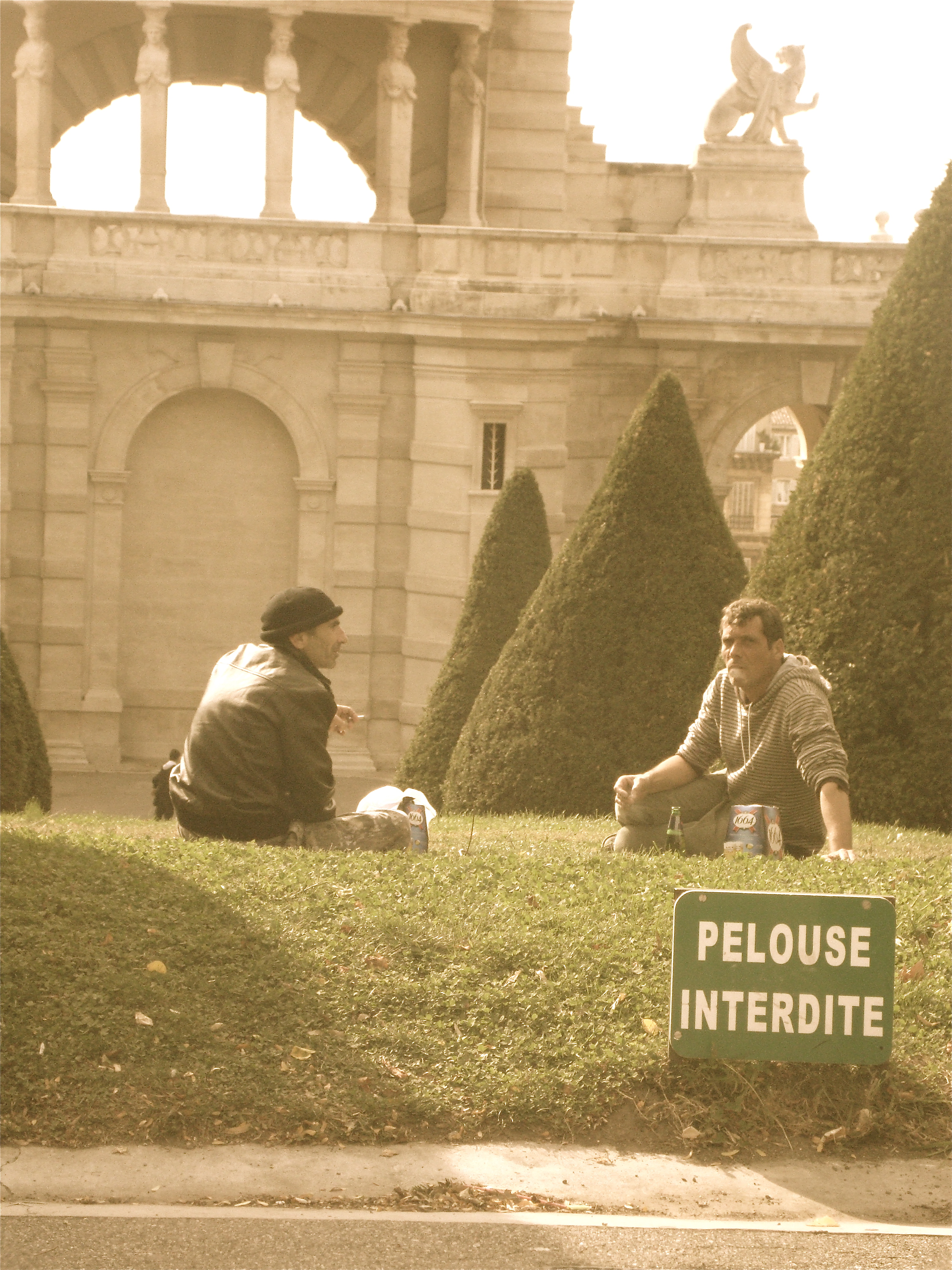

However, as it was already the middle of the afternoon, the demonstrations were in full force. The grèves over the retraite conflict in France have come to a head, with on-and-off ground transportation for the past week —mostly canceled trains and the Metro running about half of the time —, thousands of people demonstrating in the streets almost every other day and the front pages of every newspaper in the country devoted to the multitude of issues, opinions and standpoints on the age of retirement and government finances. This can make it difficult to move around and between cities in France. While I admire the fact that the French public can be so impassioned over an issue of importance in their lives, so much as to take to the streets and demonstrate — I’m not talking the one-day protests you often see in the United States over one human rights issue or another, but real demonstrations with fire, chants, speakers shouting over the crowds and students bellowing campaign slogans to popular tunes — it is hard to not become increasingly frustrated with the situation. We took shelter by walking the length of the port to the Palais Pharo, climbing to the top and looking out over the Mediterranean waters. The wind was strong on the cliff, blowing in harshly from the shore and we soon decided to look for better shelter.
 Dinner was bouillabaisse at Chez Michel on the cliff. Perhaps we went in with some grandiose expectations of bouillabaisse, and left a little disappointed with what is said to be one of the best ones in town. Perhaps I simply fail to see what the big deal is about fish stew.


The next morning, we took a bus up to Aix-en-Provence. A long lunch of tea and salads, with creamy fresh mozzarella, thick slices of salami and prosciutto and fig jam at Le Palantino. A quick stop for a cone of hot, freshly roasted chestnuts on the Cours Mirabeau. Most vineyard tours were closed as it was Sunday and lavender season is long over, so we opted for a 6 euro ride on the little train which took us more or less in little loops around the old town. Walking around on our own proved more fruitful: we stopped at La Cure Gourmande where they eagerly walk around with tins of sweets, shoving one cookie or chocolate after another at you for tasting. And really, who could deny them that. Finally a real lemon tart, without all that excessive sweetness that is meringue, at Paul Patisserie. Then it was to Les Deux Garçons, an old brasserie frequented by many famous writers, for a final cup of tea before catching the 7:15 p.m. bus back to Marseille.


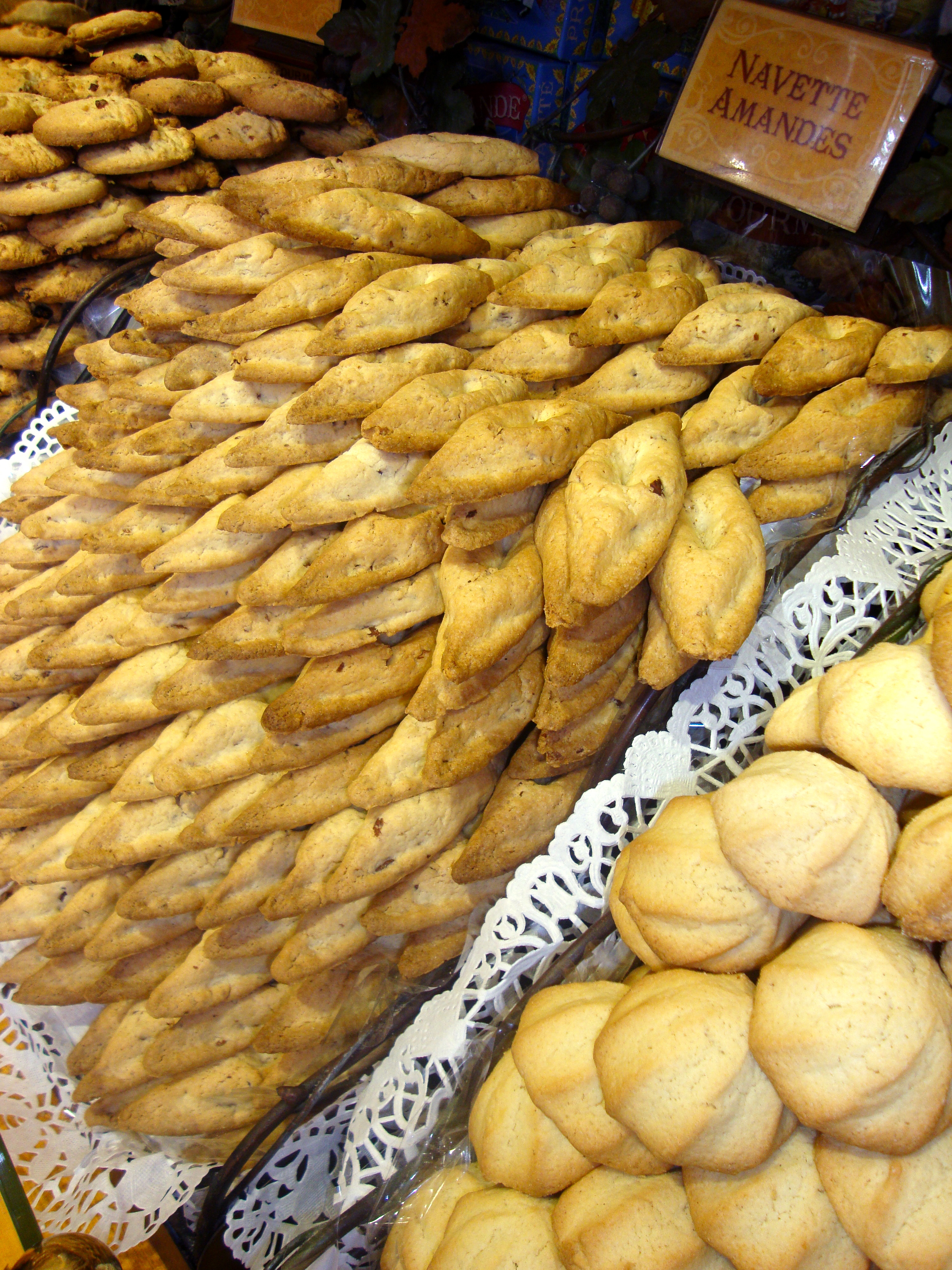
Unfortunately, the bus didn’t have the same plans and was delayed until about 8 p.m. This meant a lot of time spent freezing at the bus stop in which we made friends with the boy sitting next to us. Turns out he was going back to Marseille for school — he is studying to be a watchmaker, which is his passion — after having been home in a small town outside Aix for the weekend. When we disembarked the bus in Marseille and were saying goodbye, his face light up like a little kid’s on Christmas and he declared that he had a present for us. A little bit of rummaging around in his bag later — during which I was sure he was going to produce either a watch, or a bag of candy — he produced a bottle of wine from his hometown of Luberon. And, as my friend said, you can go from loving the French, to hating them, to loving them again, all in a day’s travels.
Decadent Paris
October 6, 2010 § Leave a comment
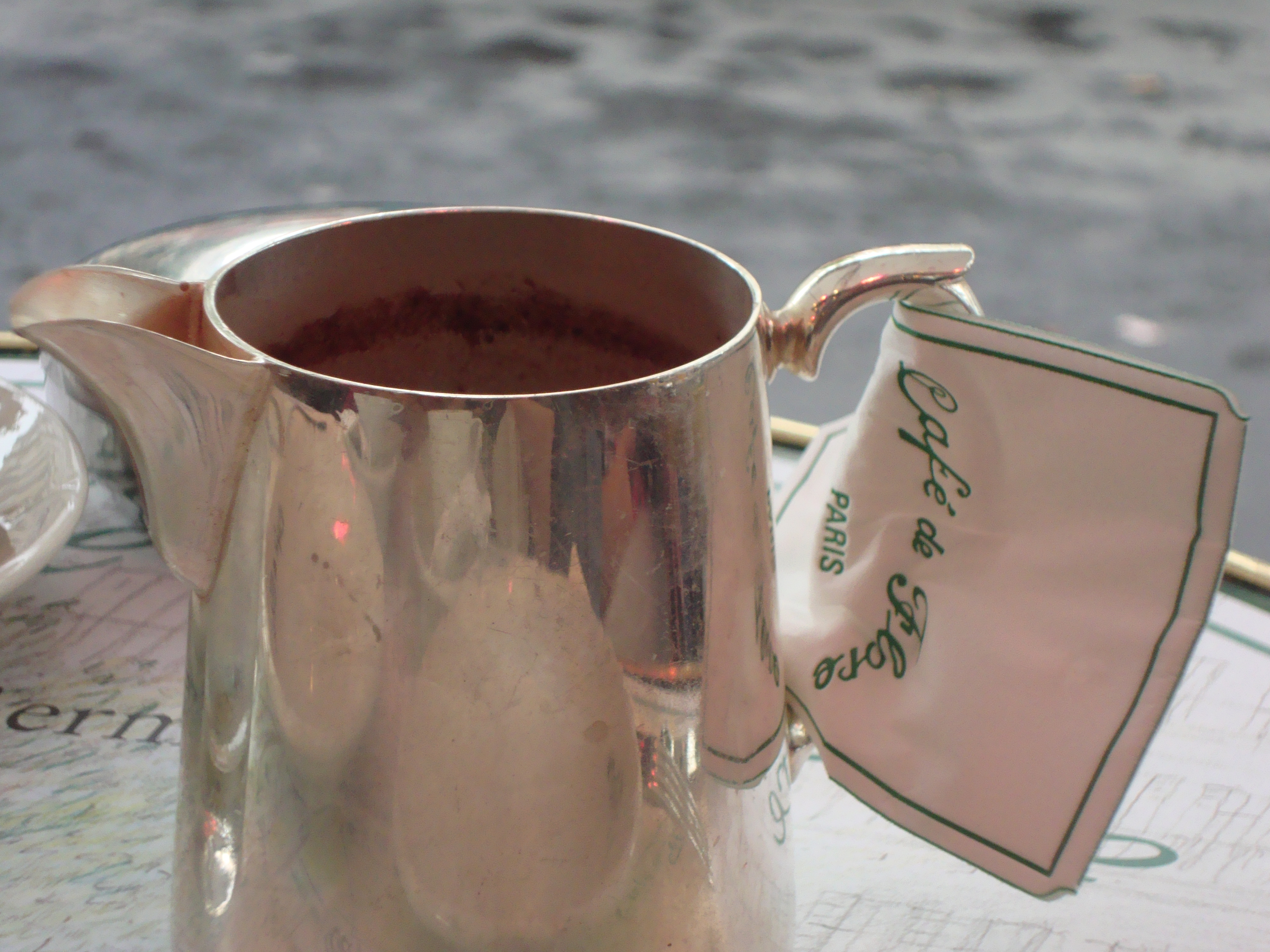
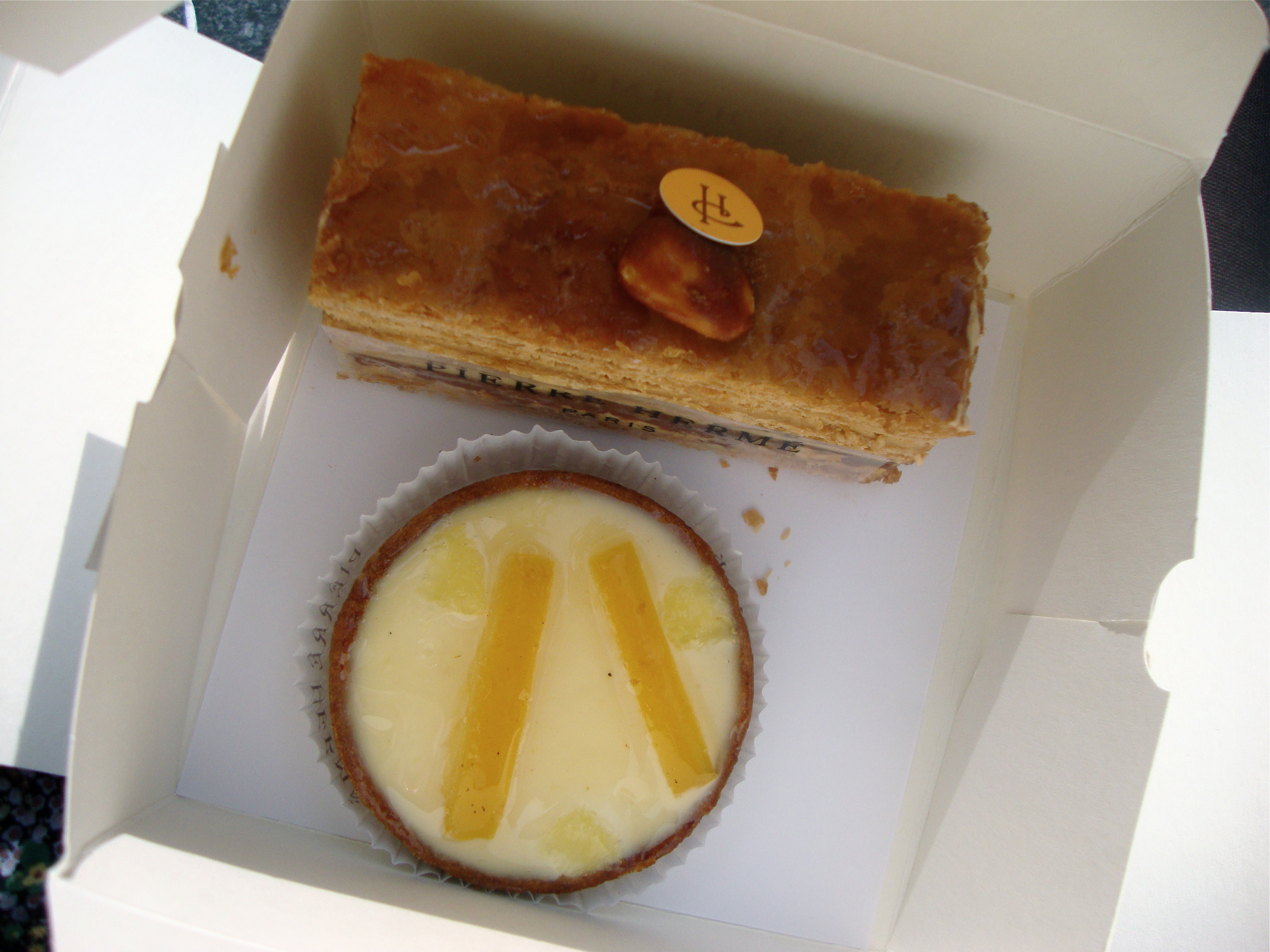
A weekend of decadence and excess with the likes of Pierre Hermé’s macarons and Café de Flore’s special molten chocolate.




 Soufflé Days